Lead Times, Supply Chain Challenges & Tariff Impact for Airlock Valves in the U.S.
🔩 Current Lead TiIn today’s manufacturing climate, rotary airlock valves play a crucial role in dust collection, pneumatic conveying, and bulk material handling systems. But as of 2025, many U.S. buyers are facing longer lead times, increased pricing, and volatile supply chain disruptions—driven not just by logistics and labor shortages, but also by rising tariff pressures on imported components and raw materials.
🔩 Current Lead Times
Lead times for standard cast iron airlock valves now average 6 to 10 weeks, while more customized units (e.g., stainless steel, beveled rotors, air purge systems) can take 12–16 weeks or longer.
Key drivers include:
- Custom rotor configurations (closed-end, scalloped, etc.)
- Seal type (Teflon U-cup, cartridge, air purge)
- Drive package availability (NORD, SEW-Eurodrive, Baldor)
⚠️ Supply Chain Challenges
1. Casting & Machining Delays
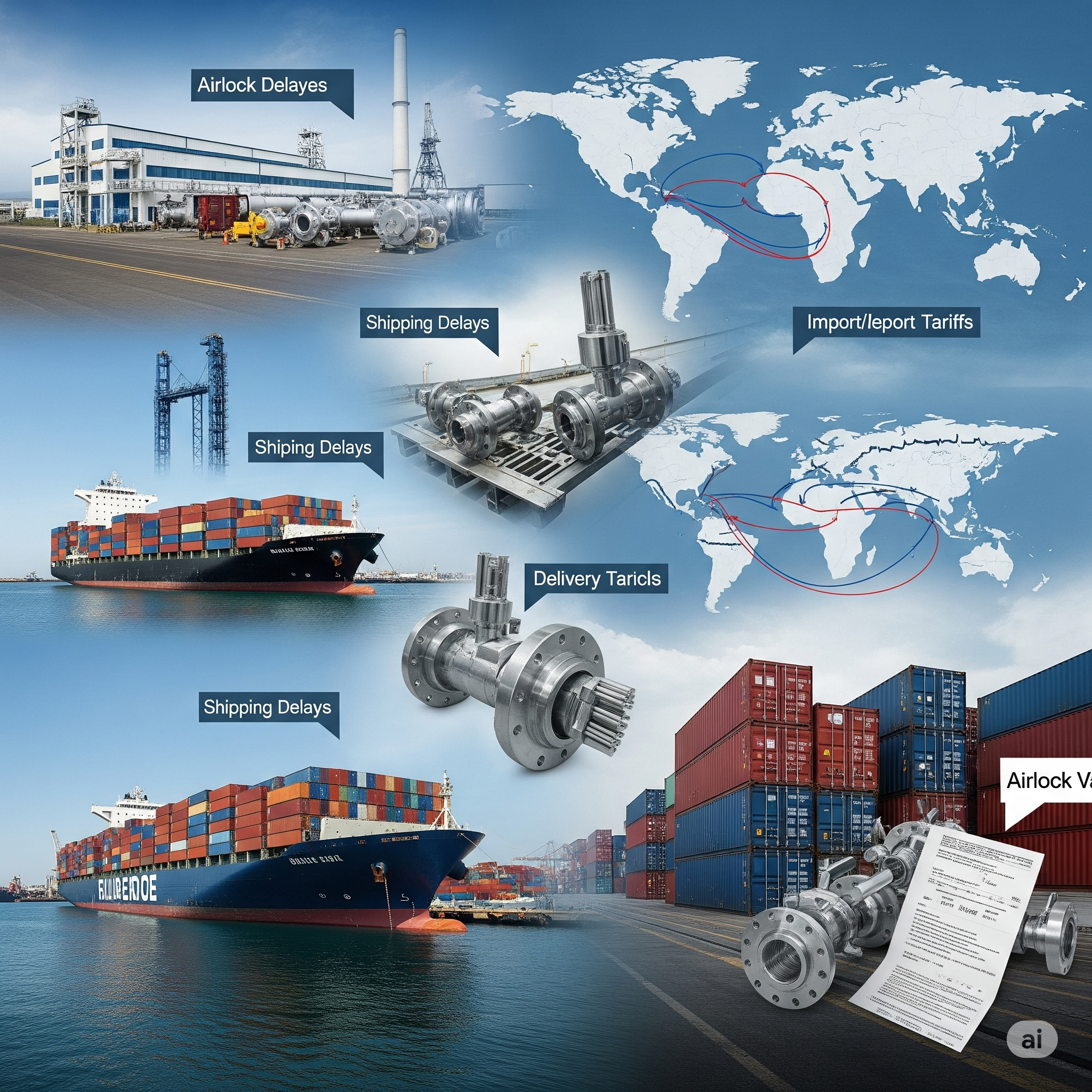
U.S. and offshore foundries remain behind on casting orders, especially for heavy, precision-machined parts. Limited capacity at CNC machining shops further increases backlogs.
2. Seal & Bearing Availability
Lead times on hybrid seal kits and specialty bearings (especially Teflon or FDA-grade) have doubled, with many U.S. suppliers relying on imports from Asia or Europe.
3. Gear Motor Bottlenecks
OEMs using NORD, SEW, or other brand gear motors report lead times from 6 to 10 weeks, especially for explosion-proof or custom flange-mounted units.
4. Labor & Freight Pressures
U.S. manufacturers face ongoing labor shortages in assembly and QA, and domestic freight delays add days—or weeks—depending on region and carrier capacity.
📉 Tariff Impact on Airlock Valve Pricing & Availability
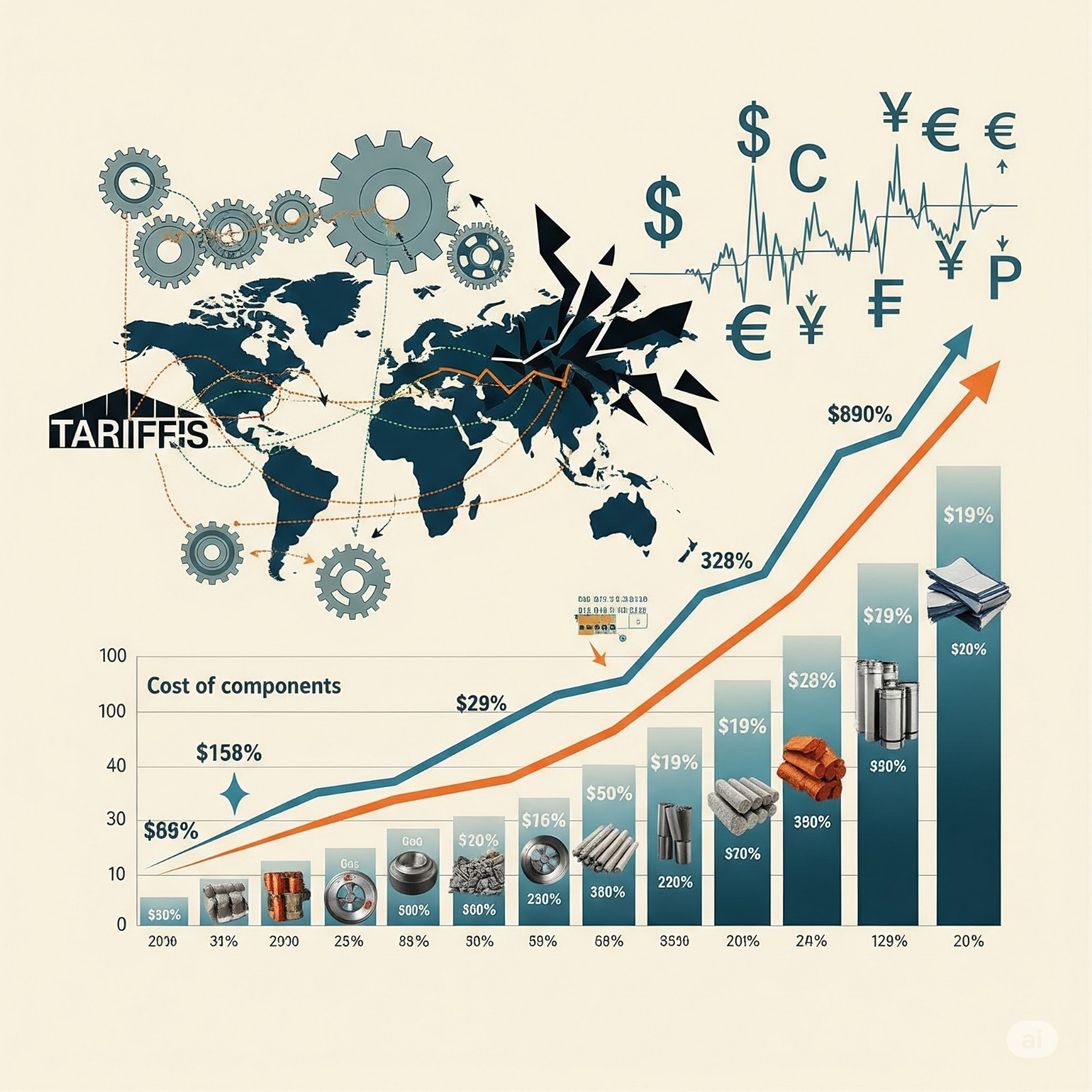
Recent U.S. tariffs on steel, aluminum, and Chinese-manufactured industrial components have had a significant impact on airlock valves:
- Imported motors, castings, and seals now carry higher costs due to Section 301 tariffs and anti-dumping duties.
- Many U.S. airlock valve manufacturers source gear drives or sealing components from tariff-affected countries (e.g., China, Germany, India), raising material costs by 10–25%.
- Some suppliers have shifted sourcing to alternative regions, but this comes with longer lead times and potential quality inconsistencies.
- Buyers should expect price fluctuations every quarter and limited-time quotes, especially on international components.
Example: A rotary valve that used to cost $5,000 may now cost $5,750–$6,000 due to import duties, longer freight routes, and vendor surcharges.
🧠 What This Means for Buyers
If your operation depends on rotary airlock valves:
- Place orders 3–4 months in advance, especially for shutdowns or capital projects.
- Stock key spares like rotors, seals, and endplates.
- Confirm with your vendor if the quote includes tariff surcharges or currency-related adjustments.
- Consider Made-in-USA valve models or locally assembled options to reduce tariff exposure.
✅ Pro Tips to Mitigate Risks
- Choose modular valve designs that use interchangeable parts.
- Consolidate your BOMs to standardize motor and seal specs.
- Build long-term partnerships with domestic suppliers who carry inventory or offer drop-in replacements.
- Request locked pricing when issuing blanket POs for the year.
🧭 Conclusion
In 2025, the market for rotary airlock valves is shaped by more than just engineering specs—tariffs, freight delays, labor shortages, and component sourcing now all impact lead time, cost, and availability. To stay ahead, procurement and maintenance teams must plan early, standardize smartly, and build strong supplier relationships.mes
Lead times for standard cast iron airlock valves now average 6 to 10 weeks, while more customized units (e.g., stainless steel, beveled rotors, air purge systems) can take 12–16 weeks or longer.
Key drivers include:
- Custom rotor configurations (closed-end, scalloped, etc.)
- Seal type (Teflon U-cup, cartridge, air purge)
- Drive package availability (NORD, SEW-Eurodrive, Baldor)
⚠️ Supply Chain Challenges
1. Casting & Machining Delays
U.S. and offshore foundries remain behind on casting orders, especially for heavy, precision-machined parts. Limited capacity at CNC machining shops further increases backlogs.
2. Seal & Bearing Availability
Lead times on hybrid seal kits and specialty bearings (especially Teflon or FDA-grade) have doubled, with many U.S. suppliers relying on imports from Asia or Europe.
3. Gear Motor Bottlenecks
OEMs using NORD, SEW, or other brand gear motors report lead times from 6 to 10 weeks, especially for explosion-proof or custom flange-mounted units.
4. Labor & Freight Pressures
U.S. manufacturers face ongoing labor shortages in assembly and QA, and domestic freight delays add days—or weeks—depending on region and carrier capacity.
📉 Tariff Impact on Airlock Valve Pricing & Availability
Recent U.S. tariffs on steel, aluminum, and Chinese-manufactured industrial components have had a significant impact on airlock valves:
- Imported motors, castings, and seals now carry higher costs due to Section 301 tariffs and anti-dumping duties.
- Many U.S. airlock valve manufacturers source gear drives or sealing components from tariff-affected countries (e.g., China, Germany, India), raising material costs by 10–25%.
- Some suppliers have shifted sourcing to alternative regions, but this comes with longer lead times and potential quality inconsistencies.
- Buyers should expect price fluctuations every quarter and limited-time quotes, especially on international components.
Example: A rotary valve that used to cost $5,000 may now cost $5,750–$6,000 due to import duties, longer freight routes, and vendor surcharges.
🧠 What This Means for Buyers
If your operation depends on rotary airlock valves:
- Place orders 3–4 months in advance, especially for shutdowns or capital projects.
- Stock key spares like rotors, seals, and endplates.
- Confirm with your vendor if the quote includes tariff surcharges or currency-related adjustments.
- Consider Made-in-USA valve models or locally assembled options to reduce tariff exposure.
✅ Pro Tips to Mitigate Risks
- Choose modular valve designs that use interchangeable parts.
- Consolidate your BOMs to standardize motor and seal specs.
- Build long-term partnerships with domestic suppliers who carry inventory or offer drop-in replacements.
- Request locked pricing when issuing blanket POs for the year.
🧭 Conclusion
In 2025, the market for rotary airlock valves is shaped by more than just engineering specs—tariffs, freight delays, labor shortages, and component sourcing all affect lead time, cost, and availability. To stay ahead, procurement and maintenance teams must plan early, standardize smartly, and build strong supplier relationships.
At Airlock Genius, we understand these challenges and proactively maintain an in-stock inventory of hundreds of airlock valves. This ensures faster turnaround times and helps our customers avoid costly delays—whether for planned projects or urgent replacements.