
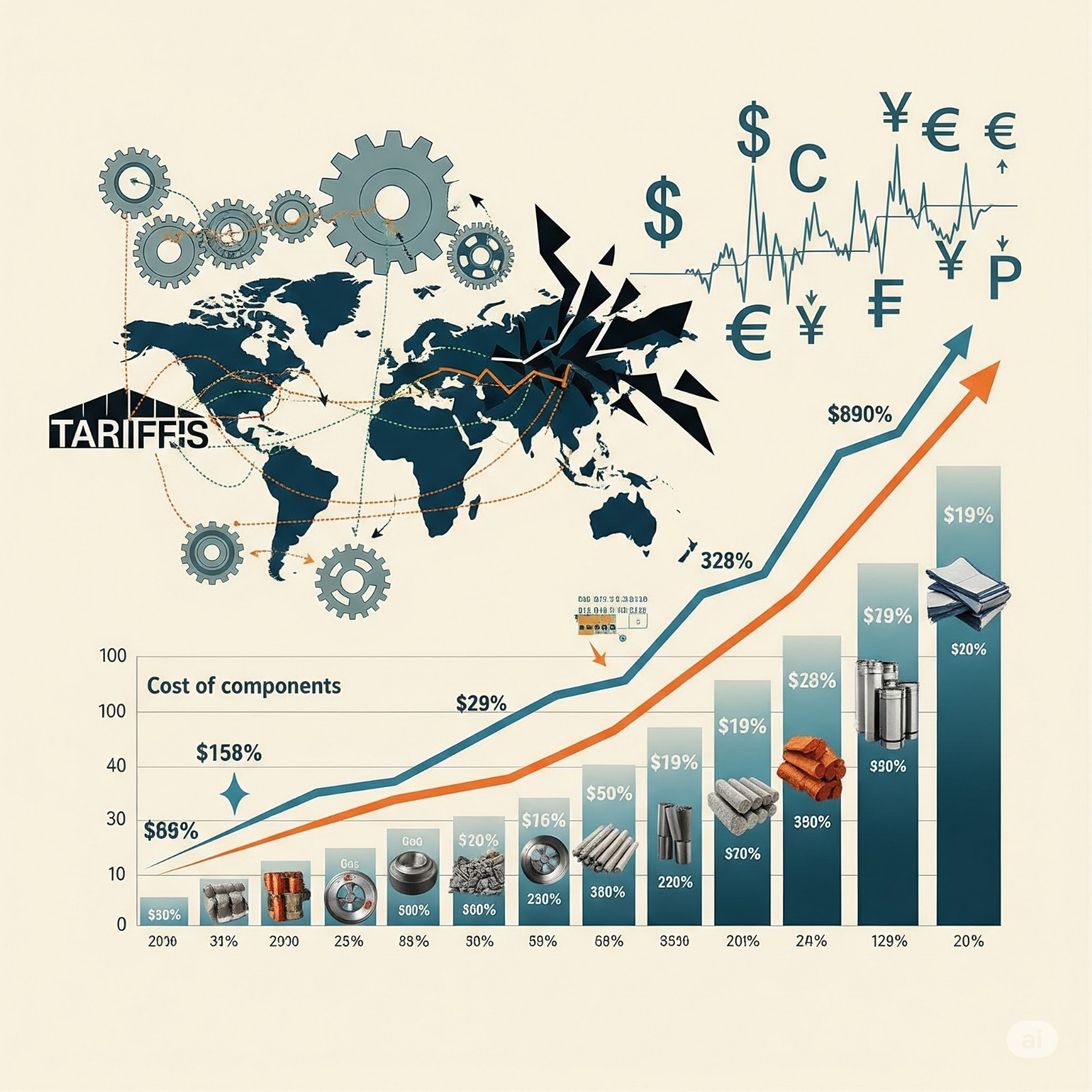
“Can U.S. Manufacturing Keep Up? The Real Cost of Tariffs in 2025”
Here’s an updated overview on how U.S. manufacturing capacity is holding up amid tariffs—and how it’s affecting prices:
🏭 1. Manufacturing capacity & activity
- Overall weak performance: The Institute for Supply Management’s PMI has been below 50 for four straight months, signaling contraction in manufacturing, with June at 49.0 (Reuters).
- Mixed sector trends: While nine industries showed growth in June, six contracted. Uncertainty around tariffs and lack of clarity post–July 9 slowed long-term planning (Al Jazeera).
- Labor & investment shifts: Many firms are scaling back hiring, increasing automation, and reassessing global supply chains .
⚙️ 2. Tariff impacts on inputs & capacity
- Raw materials surge: Steel, aluminum, and copper tariffs (now up to 50%) boosted input costs significantly. BCG estimates the metals tariff alone adds $50 billion to costs (BCG Global).
- Copper volatility: Copper futures spiked ~13% after the 50% tariff announcement, with only two U.S. smelters available—insufficient to meet demand (The Times).
- Domestic capacity constraints: Despite the intent to boost local production, rebuilding U.S. smelting and fabrication capacity is a long-term challenge—not a short-run fix .
💵 3. Pricing and cost pass-through
- Higher consumer prices: Yale Budget Lab estimates tariffs through early July cause a 1.8–1.9% bump in consumer prices, translating to ~$2,000–$2,500 household income loss this year (The Budget Lab at Yale).
- Industry pass-through: Materials-intensive goods like vehicles, textiles, leather, and apparel saw prices rise sharply—e.g., new-car prices +13.5% in the near term; +10.5% longer term .
- Domestic inflation spillover: Even U.S.-made products are more expensive due to higher input costs and supply chain disruptions.
🚗 4. Sector-specific repercussions
| Sector | Impact |
| Auto & electronics | Automakers like Ford and Toyota raised consumer prices as copper/steel costs inflated; material content doubling could add ~$5,700 per imported vehicle (Reuters). |
| Construction & appliances | Steel/aluminum tariff hikes disrupt supply chains, likely increasing costs by thousands per appliance or vehicle and straining firms like Independent Can and Heritage Steel . |
| Fashion & textiles | Leather/footwear +39%, apparel +37% short‑run; ~18% price rises estimated long‑term . |
🔭 5. Capacity outlook & strategic response
- Limited domestic capacity expansion: Rebuilding steel, aluminum, and copper facilities takes years and significant investment—not rapidly done .
- Mixed domestic benefit: Some manufacturers (e.g., Jergens Inc.) saw a 10–15% boost in demand due to reshoring, but the impact is uneven (The Australian). High-end and tech sectors continue to struggle .
- Supply chain adaptation: Firms are pivoting—diversifying sourcing, automating production, renegotiating with suppliers, and using tariff mitigation tactics .
✅ Summary
- Capacity remains constrained: U.S. firms can’t swiftly scale up raw-material production; existing capacity is insufficient.
- Costs are being passed on: Consumers are already paying more across multiple sectors due to higher tariffs.
- Temporary domestic gains: Some manufacturers benefit, but broader capacity expansion is gradual and fragile.
- Recession risks: Higher prices, slowed investment, and economic reallocation put pressure on GDP growth and employment.
In short, U.S. manufacturing capacity is struggling to keep pace with tariff-driven disruptions, leading to material shortages, higher production costs, and widespread price increases—particularly in steel-, copper-, and aluminum-intensive sectors. While some reshoring gains are emerging, full-scale domestic production ramp-up remains a long-term effort.