
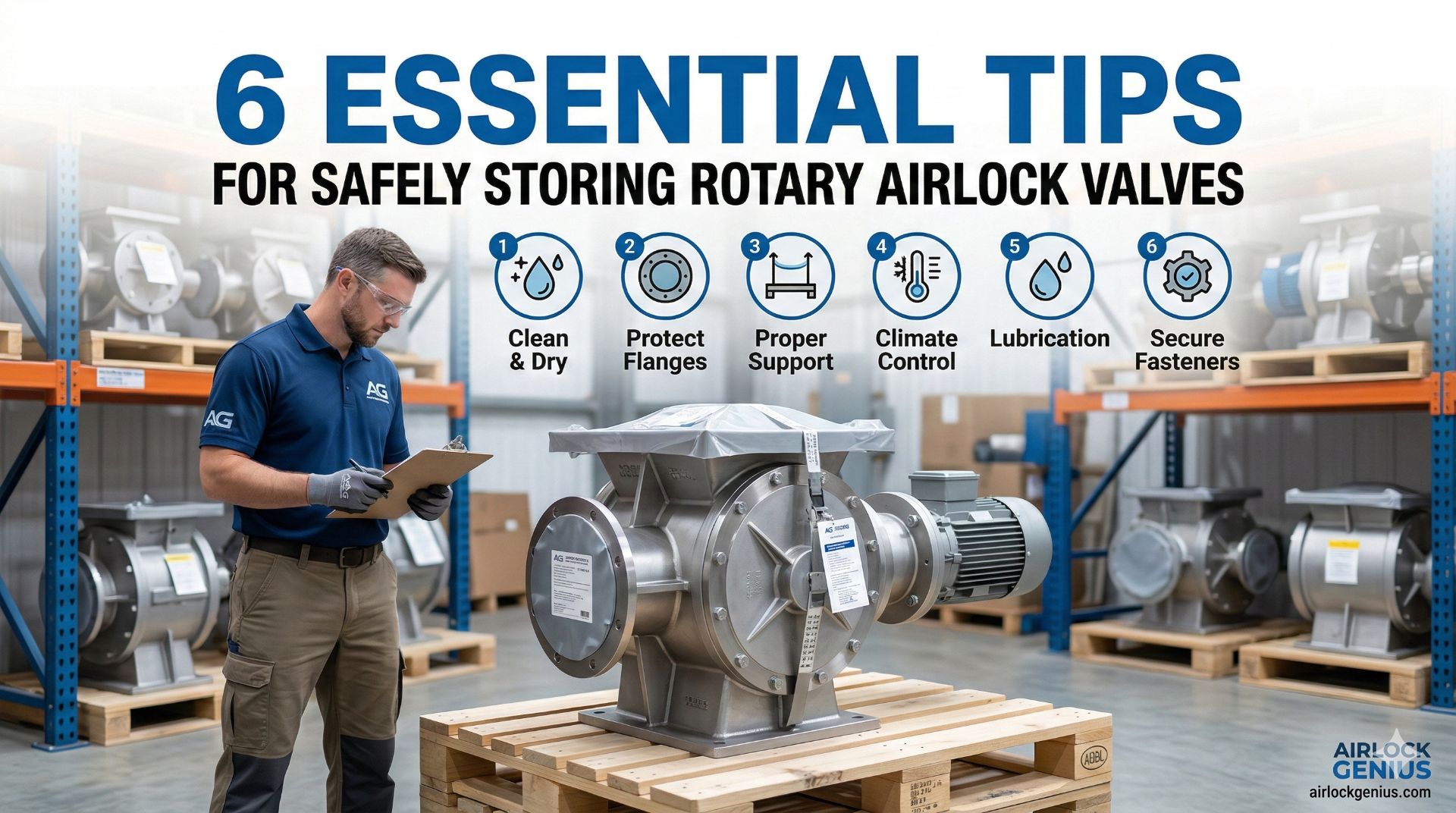
Rotary airlock valves are extremely important parts of material handling systems. Besides controlling the powder, granules, and other bulk materials discharge, they also simultaneously form an airlock seal. Maintenance of these valves is very critical as it helps to prevent the valves from being damaged, ensures their continuous operation, and also saves the cost of downtime.
At Airlock Genius, we have been manufacturing precision rotary airlock valves since 2005. Our Made in, USA products are relied on by more than 100 companies worldwide for their reliability and performance. Leveraging our in- house manufacturing capability, we decide to share some tips that will help you store your valves properly.
If these valves are not stored properly, it is possible to develop rust, get them out of alignment, or lead to operational failure. By following these guidelines, you keep your investment safe and your system running at top efficiency. So here are the key points to consider:
Tip 1: Thoroughly Inspect Upon Arrival
The first step in storage begins with inspection. Unpack your rotary airlock valve shipment carefully to check for any transit damage. Compare the contents against the packing list. Look for dents, scratches, or missing parts like flanges or seals. If issues arise, document them with photos. Contact your supplier immediately— at Airlock Genius, our team is ready to assist via our contact page.
- Why it matters: Early detection prevents hidden problems from worsening during storage.
- Common issues: Bent shafts or cracked housings from rough handling.
- Pro tip: Use a checklist for consistency in inspections.
This ensures your valve, like our 10″ Rotary Airlock Valve (HDUCI), starts storage in optimal condition.
Tip 2: Handle and Move with Precision
Rotary airlock valves can weigh hundreds of pounds. Never attempt to lift them manually to avoid injury or damage. Use appropriate equipment like forklifts or cranes. Secure lifting slings to designated points, such as inlet flanges. Balance the load to prevent tipping. Avoid attaching to fragile parts like shafts or drive assemblies.
- Equipment recommendations: Forklifts for ground movement; overhead cranes for vertical lifts.
- Safety first: Train staff on proper techniques to minimize risks.
- Our advice: For custom valves from Airlock Genius, refer to the included handling guide.
Proper movement preserves the valve’s alignment. This is key for seamless integration into your system later. Explore our range of robust valves designed for easy handling on our products list.
Tip 3: Maintain a Controlled Environment
Store your rotary airlock valve in a warm, dry, and clean space. Ideal conditions mimic a warehouse with stable temperatures. Keep humidity low to prevent moisture buildup. Dust and debris can infiltrate seals, so choose a contaminant-free area. Leave protective covers on flanges until installation. This shields internal components from environmental harm.
- Temperature range: Aim for 50-80°F to avoid extremes.
- Humidity control: Use dehumidifiers if needed in damp regions.
- Cleanliness tips: Elevate the valve on pallets to keep it off the floor.
At Airlock Genius, our valves are built with durable materials. But even they benefit from these conditions for peak performance. For more on valve durability, check our about page.
Tip 4: Prevent Condensation and Corrosion
Condensation is a silent threat during storage. It occurs when moving valves from cold to warm areas. To combat this, keep the valve wrapped or covered during transitions. Allow time for acclimation before uncovering. If moisture forms, dry thoroughly before powering up. Corrosion on machined surfaces can lead to leaks or contamination.
- Acclimation period: Wait 24-48 hours in new environments.
- Protective measures: Apply rust inhibitors to exposed metal parts.
- Warning signs: Check for water droplets or rust spots regularly.
Our expertise at Airlock Genius includes anti-corrosion designs. This tip aligns with industry standards for material handling equipment. Link to our premium solutions like the Square Flange Pneumatic Slide Gate Valve, for corrosion-resistant options.
Tip 5: Use Proper Covering for Long-Term Storage
For storage exceeding 90 days, opt for a temperature-controlled facility. Avoid outdoor exposure at all costs. Apply a weatherproof cover that allows ventilation. Expose vented areas while protecting unpainted surfaces. Retouch any paint scratches with matching coatings. This maintains the valve’s aesthetic and functional integrity.
- Cover types: Breathable tarps or specialized valve shrouds.
- Ventilation importance: Prevents trapped moisture leading to mold.
- Maintenance during storage: Periodically uncover for inspections.
Airlock Genius valves are engineered for longevity. Proper covering extends their shelf life significantly. Discover how our custom-engineered services can tailor storage advice to your needs on our partnerships page.
Tip 6: Conduct Regular Inspections and Maintenance
Storage isn’t set-it-and-forget-it. Schedule routine checks to ensure the valve remains in top shape. Inspect for signs of wear, like loose bolts or seal degradation. Rotate the rotor manually if possible to prevent seizing. Verify drain plugs are functional. For motorized units, follow vendor guidelines on heaters or lubricants.
- Inspection frequency: Monthly for long-term storage.
- Checklist items: Visual scans, torque checks, and cleanliness.
- Documentation: Keep records for warranty purposes.
If stored over a year, consult experts. At Airlock Genius, we’re here to provide pre-use recommendations. This proactive approach demonstrates our commitment to reliability. It’s part of what makes our products stand out.
Additional Considerations for Optimal Storage
Beyond the basics, consider your valve’s specific application. For food or pharma industries, ensure storage meets sanitary standards. Factor in material compatibility. Abrasive substances might require extra protections during downtime.
Integrate storage into your overall maintenance strategy. This holistic view minimizes risks.
- Industry-specific tips: Use FDA-approved covers for food-grade valves.
- Cost savings: Proper storage reduces repair needs by up to 30%.
- Expert insight: Our team has seen improper storage lead to unnecessary overhauls.
Airlock Genius offers comprehensive guides in our blogs section. Topics like supply chain impacts tie into storage planning. Think about accessories too. Store spare parts nearby for quick access.
Why Proper Storage Matters for Your Operations
Effective storage preserves the valve’s precision engineering. It ensures smooth operation when commissioned. Poor practices can void warranties or cause safety hazards. In contrast, following these tips boosts efficiency. At Airlock Genius, our experience since 2005 underscores this. We’ve helped clients avoid pitfalls through tailored advice.
- Benefits recap: Longer lifespan, fewer malfunctions, cost efficiency.
- Real-world example: A client extended valve life by 20% with our storage protocols.
- Call to action: Reach out for personalized consultations.
Investing time in storage pays dividends. It’s a simple way to enhance system performance. For industries like chemicals or mining, these tips are non-negotiable. They align with global best practices.
Conclusion
Storing rotary airlock valves correctly is essential for maintaining their functionality. By implementing these tips, you safeguard your equipment. Remember, Airlock Genius is your partner in material handling excellence. Our innovative solutions are backed by proven expertise. Ready to upgrade? Browse our full lineup on the products page.
Whether short-term or long-term, these strategies ensure reliability. Trust in our Made-in-USA quality for all your needs.