
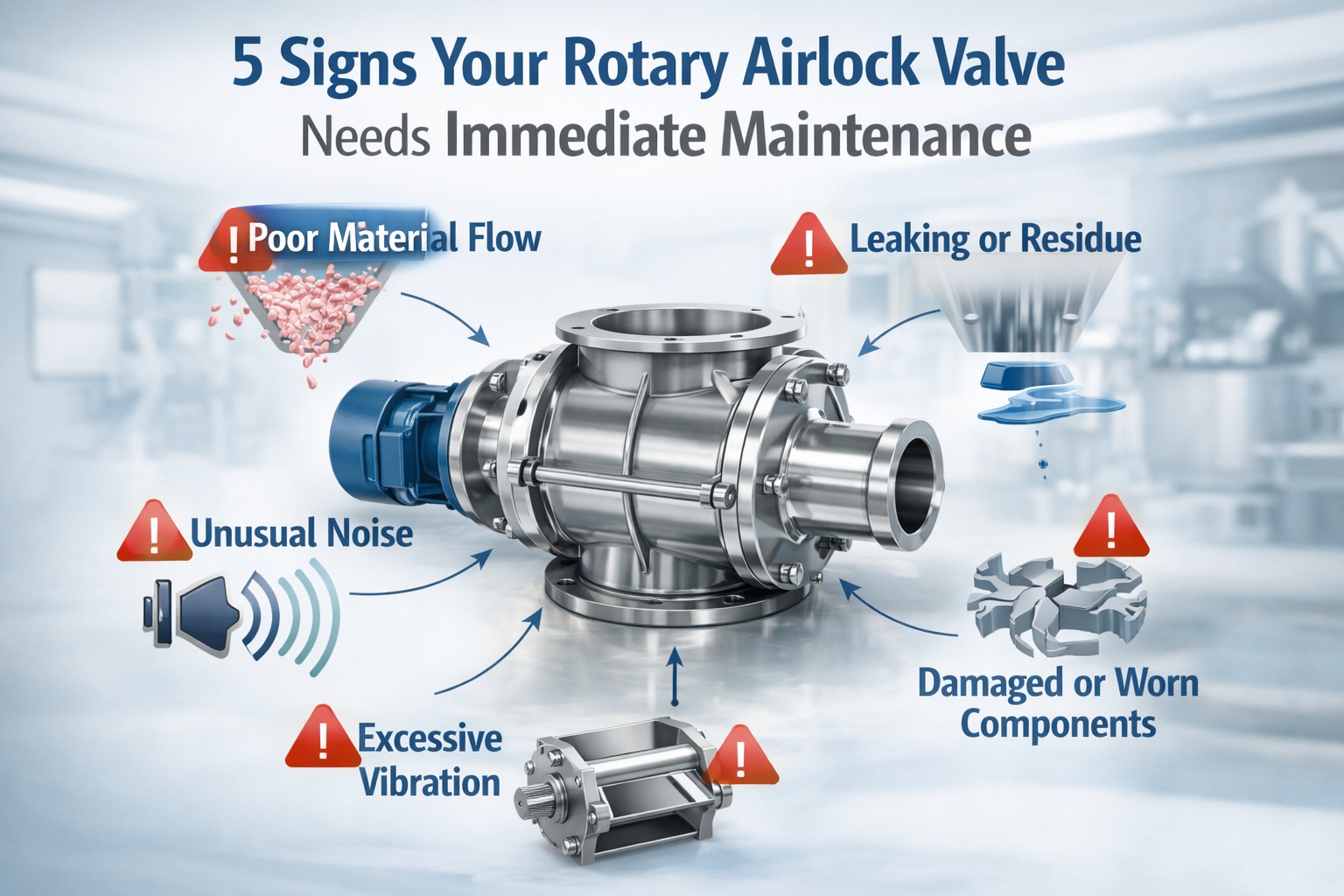
Unexpected downtime in bulk material handling can cost thousands in lost production, wasted product, and emergency repairs. For engineers and plant managers in food processing, pharmaceuticals, chemicals, dust collection, and bulk solids systems across the USA, a failing rotary airlock valve often triggers these crises. Whether feeding flour in a Georgia bakery or conveying chemical powders in a Midwest facility, your rotary airlock valve maintains pressure differentials, prevents air leakage, and ensures consistent material flow. When it falters, efficiency drops, safety risks rise, and compliance with combustible dust standards becomes urgent.
A reliable rotary airlock valve is the unsung hero of pneumatic conveying and dust collection systems. It isolates high- and low-pressure zones while metering bulk materials precisely. Ignoring early warning signs leads to rotor wear, seal failure, or complete system shutdowns. At Airlock Genius, a trusted USA-based manufacturer with in-house engineering expertise, we specialize in precision-engineered, Made-in-USA rotary airlock valves built from durable 304 or 316 stainless steel to withstand abrasive and corrosive environments.
Our solutions help facilities minimize downtime and maintain peak performance. If your rotary airlock valve shows any of the following signs, immediate maintenance is essential. Discover more about our rotary airlock valve solutions designed for your industry.
(Insert diagram of rotor clearance measurement here. Alt text: Measuring rotor clearance tolerances on a rotary airlock valve for maintenance diagnostics)
1. Unusual Noises or Vibrations
Grinding, squealing, or excessive vibration from your rotary airlock valve signals immediate trouble. These sounds often stem from worn rotor tips, misaligned bearings, or material buildup in the pockets. In high-volume food processing lines, this noise can escalate quickly, stressing the drive motor and adjacent equipment.
As a USA-based manufacturer, we recommend inspecting rotor-to-housing clearances right away—typical tolerances range from 0.004 to 0.006 inches. Always follow lockout/tagout procedures before opening the valve. Addressing this early prevents costly bearing replacements and keeps your system running smoothly.
2. Visible Material Leakage or Air Blowback
Dust escaping around the rotary airlock valve housing or reverse airflow through the inlet indicates seal degradation or enlarged clearances. This common issue in pharmaceutical and chemical plants wastes product and creates combustible dust hazards.
According to the NFPA 660 standard, maintaining tight rotor clearances is critical for flame propagation isolation in dust collection systems. Check endplate seals and replace worn components with precision-machined 316 stainless replacements. Quick intervention restores the airlock function and protects downstream filters.
(Insert photo of material leakage here. Alt text: Air blowback and dust leakage from a faulty rotary airlock valve)
3. Decreased Material Throughput or Capacity
If your rotary airlock valve suddenly delivers less product than designed—despite consistent upstream feed—worn vanes or rotor pockets are likely culprits. This symptom appears frequently in bulk handling operations where abrasive materials erode the tips over time.
Measure throughput against original specifications and inspect the rotor. Adjustable-tip rotors allow minor corrections, but fixed-vane designs may require full replacement. Our in-house engineering team at Airlock Genius can recommend upgrades tailored to your material characteristics for restored capacity.
4. Excessive Wear on Rotor Tips or Housing
Inspecting your rotary airlock valve during scheduled shutdowns often reveals polished or rounded rotor tips and scoring inside the housing. These signs of abrasion are accelerated in chemical or mineral processing applications using 304 stainless construction.
Document clearance increases with feeler gauges. Tolerances exceeding 0.008 inches demand immediate action to avoid metal contamination downstream—especially critical in food-grade systems. Proactive tip rebuilding or full rotor exchange prevents escalation and extends valve life significantly.
(Insert photo of worn rotor tips here. Alt text: Worn rotor tips on rotary airlock valve showing signs of immediate maintenance need)
5. Motor Overload, Overheating, or Stalling
Rising motor current draw or frequent overheating points to binding in your rotary airlock valve—often from seized bearings, foreign objects, or excessive differential pressure. This final warning sign risks complete failure and safety trips in dust collection setups.
Monitor amp readings against nameplate values. Lubricate or replace bearings with heavy-duty outboard designs, and verify drive chain alignment. In severe cases, consult experts for custom-engineered solutions that match your system’s pressure requirements.
Conclusion
Recognizing these five signs—unusual noises, leakage, reduced throughput, visible wear, and motor strain—allows you to address rotary airlock valve issues before they halt production. Regular inspections of clearances, seals, and rotors, combined with proper materials like 304/316 stainless steel, ensure compliance, safety, and efficiency in your facility.
Preventive maintenance pays dividends in uptime and cost savings. Partner with a manufacturer that understands your challenges. As a USA-based leader in precision material handling components, Airlock Genius delivers reliable rotary airlock valve solutions engineered for longevity.
Ready to restore performance? Contact our team for a free consultation on your rotary airlock valve needs. Our experts are here to help keep your operations running smoothly.
Frequently Asked Questions
How often should I inspect my rotary airlock valve?
Perform visual and clearance checks quarterly, or after processing 500,000 pounds of material. Increase frequency for abrasive products.
What materials work best for rotary airlock valves in food processing?
Food-grade 304 or 316 stainless steel with sanitary finishes meets FDA and USDA requirements while resisting corrosion.
Can I repair a rotary airlock valve myself?
Basic seal and lubrication tasks are feasible with proper training, but rotor rebuilding or tolerance adjustments require specialized tooling and expertise.